
I was a dentist for twelve years. For most of those years I finished my clinical day, went home, had dinner, and then sat down at 9pm to write up notes. Not because I was disorganised. Because a full book of patients leaves no gaps, and the notes have to be done properly, and properly takes time.
That is why I built DigitalTCO. Not as a business idea. As a way out of the 9pm shift.
This guide is everything I wish someone had handed me before I started looking at AI note-taking tools. What the software actually does, what it does not do, why UK records have their own specific pressures, what the regulators expect, how to evaluate the options, and where the alternatives genuinely differ. I sell one of these tools, so read the comparison sections with that in mind. But the rest of this guide applies whichever product you end up choosing.
In this guide
What AI dental notes actually are
AI dental notes software takes your voice and turns it into a structured clinical note. Not a transcript of what you said. A proper note, organised the way a clinical record should be organised: presenting complaint, history, examination findings, diagnosis, options discussed, consent, treatment detail, post-operative instructions, follow-up plan.
The workflow looks like this:
During the appointment (ambient capture, where the software listens to the consultation itself) or straight afterwards (a quick voice summary, usually 30 to 60 seconds). You talk naturally, in whatever order things come to mind, using whatever shorthand you normally use.
The software transcribes the audio, then a clinical language model reorganises it into a structured note. It expands abbreviations, files each detail under the right heading, and applies your preferred format and phrasing.
You read the note, correct anything that needs correcting, and paste it into your practice management system. The clinical judgement, and the responsibility for the record, stays with you.
The clever part is not the transcription. Speech-to-text has been decent for years. The clever part is the structuring: taking sixty seconds of natural, unordered speech about a composite restoration and producing a note that covers the findings, the radiographic justification, the options you gave the patient, the risks you warned about, the materials you used and the advice you gave afterwards. The parts of the workflow are covered in more depth on the AI dental scribe page.
Good tools also learn your way of working. You describe your standard approach to a procedure once, and from then on you only mention what was different about this patient. The note fills in your standard detail around the specifics. That is where the real time saving lives.
What they are not
Two things get confused with AI dental notes constantly, and the confusion costs dentists money because they buy the wrong category of product.
Not a dictation tool. Dictation software, the Dragon-style products, converts speech to text word for word. You have to compose the note in your head and speak it in full, in order, with punctuation. It moves the typing from your fingers to your voice, but the composing is still all you. If you have ever dictated a referral letter, you know how much concentration it takes. AI note software removes the composing, not just the typing. You ramble; it writes.
Not a transcript. Some tools record the appointment and hand you back a verbatim transcript of everything said in the surgery. A transcript is not a clinical record. It buries the clinical content inside small talk, it has no structure, and nobody reviewing it later can find the consent discussion or the diagnosis without reading the whole thing. A structured note is a different artefact entirely, and it is the artefact your record-keeping obligations actually require.
If a product demo shows you a wall of verbatim text, you are looking at transcription with a marketing budget. Keep looking.
Why UK notes are different
Most AI scribe products were built for general medicine, and plenty were built for the American market. UK dental records sit under their own specific pressures, and a tool that does not understand them will produce notes that look impressive and defend you poorly.
The GDC standard
The GDC’s Standards for the Dental Team require registrants to make and keep contemporaneous, complete and accurate patient records. Each of those three words does work. Contemporaneous means written at the time or as soon as possible afterwards, not reconstructed at 9pm from memory. Complete means the record covers the whole clinical encounter: findings, diagnosis, options, consent, treatment, advice. Accurate means it reflects what actually happened, not what usually happens.
Here is the uncomfortable irony of the old way of working. The dentist who stays late to write careful, detailed notes is producing records that are less contemporaneous than the dentist who speaks a summary in the sixty seconds after the patient leaves. Voice capture, done at the chairside, is not a compromise on the GDC standard. It is closer to it.
Complaints and litigation
When a complaint lands, whether it is a practice-level complaint, an NHS complaint, a claim, or a GDC investigation, the record is the evidence. The expert reviewing your care was not in the room. They have your notes, and they will judge your clinical care almost entirely through them. Excellent dentistry recorded in three lines reads, to a reviewer, like three lines of dentistry.
The standard forensic question is not “was the treatment good” but “can the record prove it was good.” Those are different questions, and only the second one is in your control after the event.
The elements that decide cases are rarely the treatment detail. They are the consent conversation, the options presented including no treatment, the specific risks warned, the justification for radiographs, and the safety-netting advice. These are exactly the elements that vanish from notes written in a hurry. I have written a full breakdown of what a defensible record contains on the defensible dental notes page.
What indemnifiers expect
UK indemnity organisations have said versions of the same thing for decades: the quality of the records is often the difference between a defensible case and an indefensible one. If it is not written down, you will struggle to prove it happened. Their guidance consistently pushes in one direction, which is more detail, recorded sooner, covering consent and communication as thoroughly as the clinical steps. None of that is controversial. What is new is that the time cost of meeting that standard has collapsed. Speak to your own indemnifier about AI tools specifically; positions vary and the conversation is worth having before you adopt anything.
The UK-specific detail test
A quick way to expose a tool built for another market: say “BPE 3 in the lower right sextant, six point pocket chart indicated” and see what comes back. A tool that does not know what a BPE is, or that charts in Universal numbering when you speak Palmer notation, was not built for UK dentistry, whatever the sales page says.
The UK regulatory picture
Three frameworks matter when you put an AI documentation tool into a UK practice. None of them is a reason to avoid the technology. All of them are reasons to ask vendors precise questions and expect precise answers.
UK GDPR
Clinical notes and audio recordings are special category health data. Your practice is the data controller; the software vendor is a data processor acting on your instructions. That relationship has to be formalised in a data processing agreement, and you are entitled to know exactly what happens to the data. Before you sign up to any vendor, ask:
A vendor who answers these questions slowly, vaguely, or with a link to a generic privacy policy is telling you something useful. The model training question matters most. Your patients’ clinical data should not be improving someone else’s product. DigitalTCO’s AI engine does not retain any patient data between sessions and does not use your data to train, fine-tune, or improve any machine learning models.
The NHS Data Security and Protection Toolkit
The DSPT is an annual self-assessment for organisations that handle NHS patient data, built around the National Data Guardian’s ten data security standards. If your practice holds an NHS contract, your information governance lead will want to know where any new supplier stands against it. It is a fair question to put to any vendor. For our part, DigitalTCO submits an annual DSPT assessment and maintains a published “Standards Met” status, and has achieved Cyber Essentials certification.
MHRA and software as a medical device
In the UK, software can qualify as a medical device when it has a medical purpose, and the MHRA classifies devices by risk, from Class I at the lowest-risk end up through Class IIa, IIb and III as the potential for harm increases. Where a piece of software falls depends on what it claims to do: software that drives diagnosis or treatment decisions sits higher up the scale than software that documents them. Documentation tools generally sit at the lower-risk end, but the honest answer is that classification depends on the specific product and its claims, so ask the vendor directly whether their product is registered with the MHRA and in what class. DigitalTCO is registered with the Medicines and Healthcare products Regulatory Agency (MHRA) as a Class 1 medical device.
The full detail of how we handle all of this, including encryption standards, data flow, and the compliance documents your IG lead will ask for, is on the security page.
How to evaluate a tool
Every product in this category demos well. The vendor picks the case, the audio is clean, and the note looks lovely. Evaluate on your own clinical days instead, against four criteria.
1. Accuracy on dental terminology
General medical scribes stumble on dentistry. Materials, notation, perio charting, endo working lengths, the difference between a BPE and a six point pocket chart. Test with your hardest cases: a molar endo with all the working length detail, a perio case with sextant-by-sextant findings, a full new patient exam. Say your material names, your bur sizes, your local anaesthetic batch details. Count the corrections you have to make. A tool that needs five corrections per note is not saving you time; it is changing the kind of work you do at 9pm.
2. Template ownership
This is the criterion most people miss. Some tools hand you a library of fixed templates written by someone else, and every note comes out sounding like that someone else. The better model is build-as-you-go: you describe your own gold standard version of each procedure once, in your own words, and the tool reuses your standard while you dictate only what was different about today’s patient. Your notes should read like you wrote them, because you did. If you cannot change how the note is structured and phrased without emailing support, the templates own you rather than the other way round.
3. Speed in the real gaps
The realistic gap between patients is a couple of minutes. The whole loop, speak, generate, review, paste, has to fit inside it. Time it during your trial. A note that takes 45 seconds to generate but five minutes to fix does not fit. A note that is ready to paste in under two minutes changes your day, because the notes are finished when the day is finished.
4. Price transparency
Read the pricing page before the demo, not after. Watch for per-seat pricing that multiplies across associates, tiers that lock the useful features behind the expensive plan, usage caps that turn a quiet month’s price into a busy month’s surprise, and “contact us” where a number should be. A vendor confident in their value puts the price in public. Ours is on the pricing page: one flat fee, everything included.
The alternatives, honestly
DigitalTCO is not the only option, and pretending otherwise would insult your intelligence. Heidi is a well-known AI scribe used across many areas of healthcare, with dentistry as one of the specialties it serves. Kiroku is a UK dental note-writing tool built around structured smart templates. Dentistry Dashboard, whose guide you may well have read before this one, offers documentation as part of a broader practice platform. Each takes a genuinely different approach, and the right choice depends on how you like to work: a generalist scribe brings scale, a template-driven tool brings structure, a platform brings breadth, and a dedicated dental documentation tool brings depth on the one job. I have written detailed, specific comparisons rather than repeating marketing claims: see DigitalTCO vs Heidi, DigitalTCO vs Kiroku and DigitalTCO vs Dentistry Dashboard, or the full comparison hub for the rest of the market.
Where DigitalTCO has earned its place is depth and track record. It has done one job since 2023: dental clinical documentation. Over 1.3 million clinical notes have been generated on the platform. More than 900 dentists use it in practice every day, and their feedback has shaped three years of refinement on this one specific problem. It writes notes in your words through build-as-you-go templates, it understands UK dentistry natively, from Palmer notation to BPEs to NHS banding language, and it works alongside whatever PMS you already use.
What it costs
DigitalTCO is one flat fee: £99/month for the Solo plan. Every feature included, unlimited notes, no tiers, no usage caps, no per-seat arithmetic. There is a 14-day free trial, which is long enough to cover two real clinical weeks rather than one good demo day. If it does not pay for itself in reclaimed evenings before the trial ends, do not pay for it.
Finish your notes before you leave the surgery
Speak for 30 seconds after each appointment. Get a structured, defensible clinical note. Paste it into your PMS. Go home.
14-day free trial. £99/month. Works with any PMS.
Start My 14-Day Free Trial →Works alongside SOE/EXACT, Dentally, R4, and any other PMS.
Frequently asked questions
Watch the full demo, voice to finished note, free
A real dentist using DigitalTCO across a full clinical day: dictation, finished notes, medicolegal flags, patient letters. No sales call, no calendar. Enter your email and watch it now.
Related reading
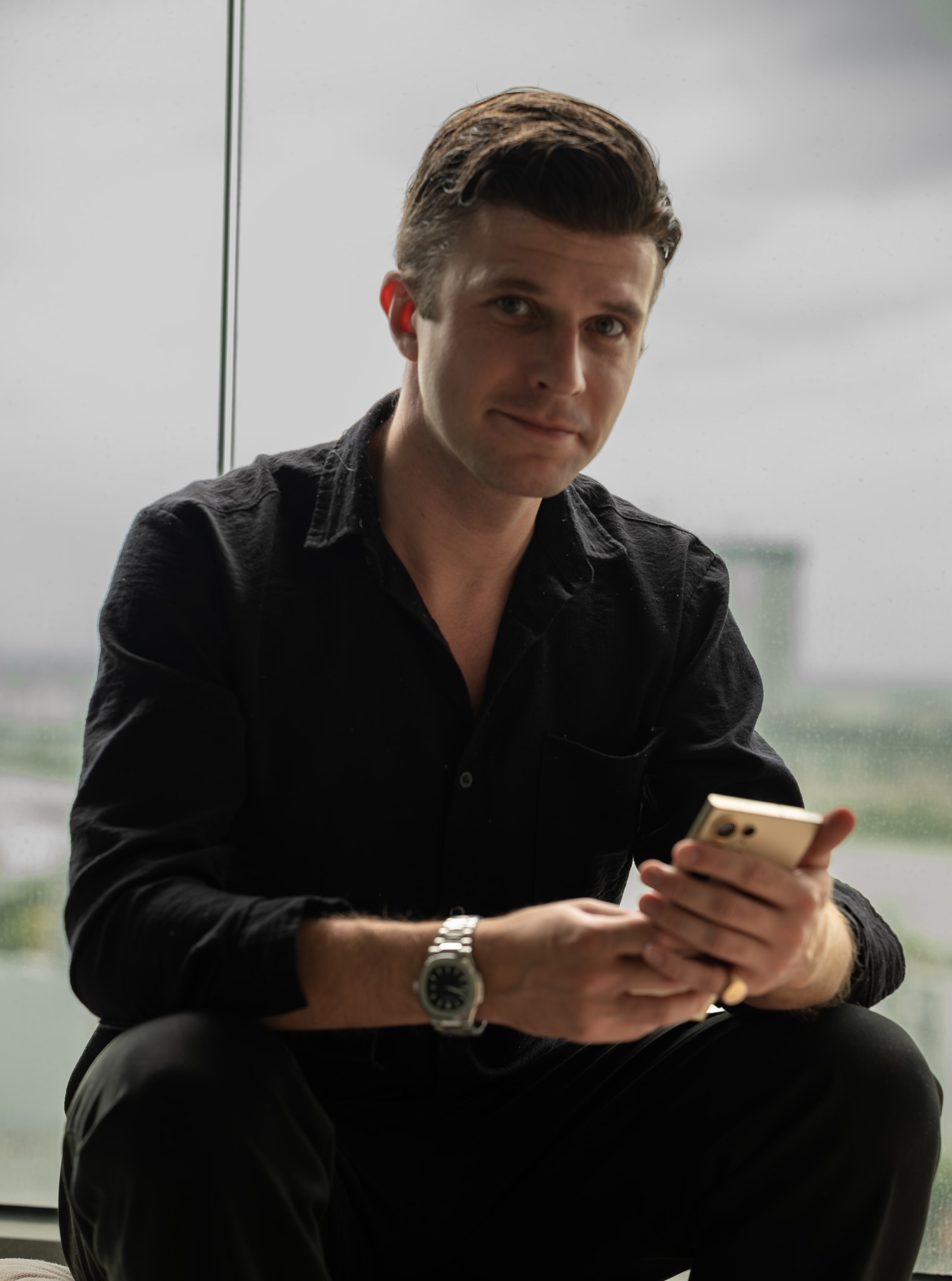
Kevin
BDS Dundee · Ex-dentist (2014-2026) · Founder, DigitalTCO
Kevin practised dentistry in the UK for twelve years and built DigitalTCO to end the 9pm note-writing shift. He created the AI dental documentation category in 2023, and the platform is now used daily by 900+ dentists across the UK and US.